We live in a world that is constantly asking us to move faster.
Faster communication. Faster results. Faster success.
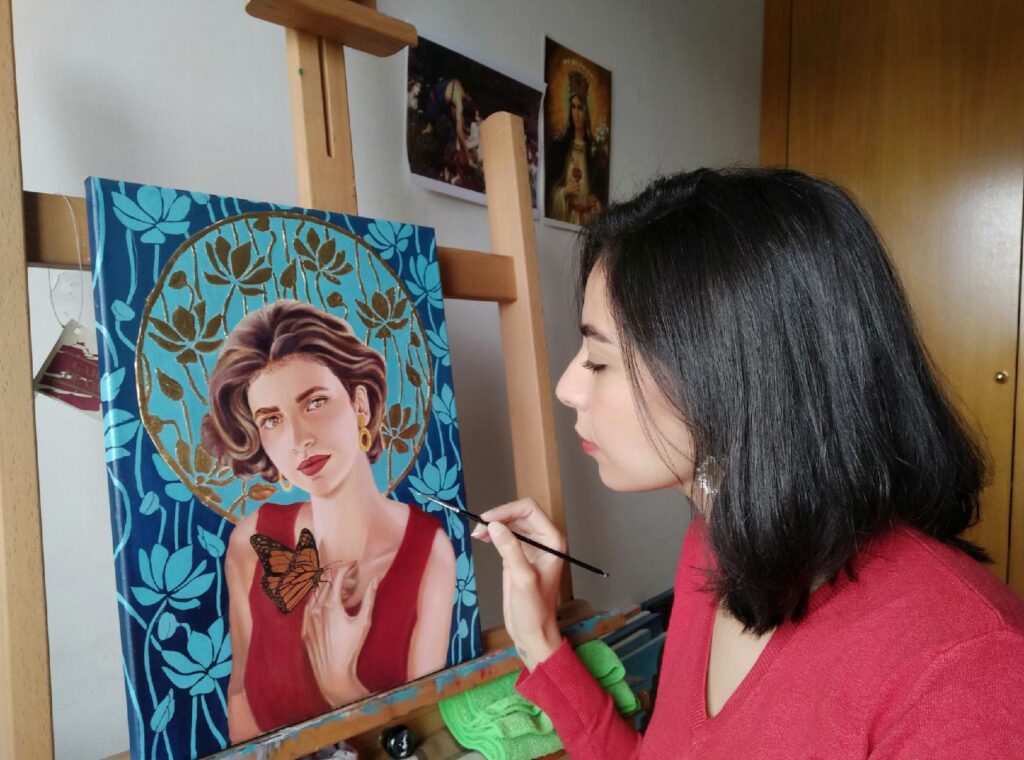
Every day, we are encouraged to keep up with trends, follow what is popular, and produce more in less time. Social media has amplified this feeling. We are surrounded by a constant stream of images, videos, and artwork, all competing for our attention. It often feels as though if we slow down, we will be left behind.
The art world is not immune to this pressure.
Artists today are often expected to create continuously, share constantly, and keep up with ever-changing trends. Sometimes it can feel as though the value of a piece is measured by how quickly it can be produced or how much attention it receives online.
But I believe that some of the most meaningful art is created in a very different way.
I believe in slow art.
Slow art is not about working slowly for the sake of it. It is about allowing ideas the time they need to develop. It is about research, experimentation, reflection, and craftsmanship. It is about giving a work the attention it deserves rather than rushing it toward completion.
When we look at the great artists of the past, we often forget how much time their works required. Many of the old masters spent months or even years developing a painting. They made studies, sketches, revisions, and sometimes started over entirely when a composition was not working.
The finished painting was only the visible result of a much longer creative journey.
That way of working has always inspired me.
When I begin a new project, I rarely think about a single artwork. Instead, I think about a complete series. I spend time exploring ideas, filling sketchbooks, researching references, testing compositions, and considering different possibilities before committing to a final piece.
This stage is invisible to most people, but it is often where the real work happens.
An artwork is not born the moment the brush touches the paper. It begins much earlier, in the process of observation, thinking, questioning, and imagining.
For me, creating art is not simply about producing an image. It is about building a connection between an idea and its final form. That connection cannot always be rushed.
Whether I am painting with watercolor, applying gold leaf, or embroidering on paper, each technique requires time and patience. Every layer, every stitch, and every decision contributes to the final result.
The process itself becomes part of the artwork.
Slow art has taught me many lessons. It has taught me patience when progress feels invisible. It has taught me discipline when a piece requires more work than I expected. Most importantly, it has taught me to trust the creative process rather than chase immediate results.
In a culture that often celebrates speed, choosing to work slowly can feel almost rebellious.
Yet there is something deeply rewarding about dedicating yourself to a piece without rushing. There is joy in refining an idea, solving problems, and watching a work gradually reveal itself over time.
Not every artwork needs months or years to be meaningful. Quick sketches and spontaneous drawings have their own beauty and purpose. They can capture energy, movement, and emotion in ways that more developed works sometimes cannot.
But there is also a unique beauty in taking your time.
The beauty of creating something thoughtfully.
The beauty of mastering a skill through repetition and practice.
The beauty of allowing an idea to grow rather than forcing it to arrive too quickly.
In the end, slow art reminds us that creativity is not a race.
Art is not simply about reaching the finish line. It is about everything that happens along the way: the discoveries, the mistakes, the revisions, the moments of doubt, and the small victories that shape both the artwork and the artist.
In a fast world, slow art offers something increasingly rare: the opportunity to pause, to observe, and to create with intention.
And perhaps that is exactly why it remains so valuable.